
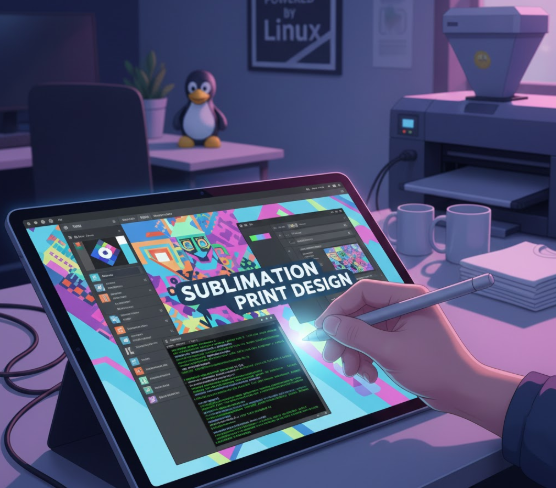
The Sublimation printing over clothing has vastly become a popular method for creating custom shirts, mugs, and other products with vibrant, full-color designs. While many professional people automatically think of Windows or macOS for designing clothing based sublimation graphics.
Linux also offers a powerful, versatile set of advanced tools that can help you create professional designs smoothly and effortlessly.
With the open-source graphics software and with a very little technical know-how about this, you can build stunning sublimation prints without spending a fortune on commercial programs.
Let me tell you why knowing all this stuff will be helpful for you: if you’re inot the business of clothing brand printing design using old fashioned machines, see the sublimated-shirts.com adapted these modern things into there business and have experienced a significant growth in recent months.
Investing and incorporating modern technologies isn’t a money waste, its an investment that have a huge potential of making your sublimation printing business an example of success.
Why Use Linux for Sublimation Design When There Are Other Methods?
Linux is often praised for its stability, customization, and open-source software ecosystem with modernized framework. For designers, these qualities translate into more controlled environment over your workflow and access to high-quality and high tech tools without expensive legalization.
Whether you’re running Ubuntu, Fedora, or another distribution, Linux provides a significantly efficient programs that can handle vectorized graphics, photo editing, and post-printing color management on clothing, all essential for sublimation printing.
Another well known advantage is that Linux can run on older or less powerful hardware without slowing down, which means you can repurpose an old laptop as a dedicated design workstation.
With these amazing technically designed tools like Inkscape, GIMP, and Krita, you have a wide range fo options for everything you need to design intricate artwork for sublimation shirts.
Modern Linux Graphics Tools That Work
Here are some of the top open-source graphics tools available on Linux for sublimation design, and if you’re one into business and still using old schooled ways for printing your clothing, then mus consider knowing these:
- Inkscape: Inkscape is a free vector graphics editor that rivals paid software like Adobe Illustrator. Vector graphics are perfect for sublimation because they can scale to any size without losing quality, which is crucial for printing on shirts of different sizes. Inkscape allows you to create crisp lines, smooth shapes, and detailed text, giving your sublimation designs a professional look.
- GIMP (GNU Image Manipulation Program): GIMP is a raster graphics editor, similar to Adobe Photoshop. It’s ideal for working with photos, textures, and gradients in your designs. GIMP offers advanced editing tools, including layers, masks, filters, and color adjustments, so you can make precise modifications to your artwork before printing. Combined with Inkscape, GIMP can handle almost any design task.
- Krita: Krita is a painting and illustration program that is excellent for freehand drawing and digital artwork. If your sublimation shirts feature hand-drawn illustrations or custom sketches, Krita provides the brushes, pen pressure support, and color management tools you need to bring your ideas to life.
Workflow Tips for Sublimation Prints on Linux System
Creating sublimation-ready designs isn’t just about software, it’s also about workflow. Here are some tips to optimize your Linux design process:
- Use the Right Color Mode: Sublimation printing typically uses RGB color mode. Make sure your graphics tools are set to RGB to match your printer’s output. While Linux tools like GIMP use RGB by default, double-check before exporting your design.
- Set Accurate Dimensions: Measure the print area on your shirts or products and create your designs at the correct size. Vector tools like Inkscape make resizing easy without losing quality.
- Export in High-Resolution Formats: Always export your designs in formats suitable for sublimation, such as PNG with a transparent background. Avoid low-resolution images, as they can appear blurry or pixelated on your final print.
- Experiment with Layers: Both GIMP and Inkscape use layers, which allow you to separate text, shapes, and images. Layers make it easy to tweak individual elements without affecting the whole design.
- Test Print First: Before committing to a large batch of shirts, print a test design to ensure the colors, size, and placement are accurate.
Running Linux Graphics Tools on Windows (Optional)
For designers who prefer Windows but want to explore Linux software, tools like VcXsrv make it possible to run Linux GUI applications on a Windows machine. By installing a Linux distribution in WSL (Windows Subsystem for Linux) and using VcXsrv, you can access Inkscape, GIMP, or Krita without switching operating systems entirely. This is a great way to combine the familiarity of Windows with the power of Linux design tools.
Final Words
Linux offers a robust, cost-effective alternative for sublimation design. By leveraging open-source software like Inkscape, GIMP, and Krita, you can produce high-quality, vibrant designs for shirts, mugs, and other sublimation products. Whether you’re a hobbyist or a small business owner, Linux provides the tools you need to unleash your creativity without the high cost of commercial software. With the right workflow and attention to detail, you can create professional-quality sublimation prints entirely on Linux and maybe even discover a new favorite way to design.